
Shakespeare Translator: Shakespearean Stage English, Clarified
This Shakespeare translator helps you move between today's English and the stage language of the late 1500s–early 1600s: second-person thou/thee/ye, third-person -eth ("hath," "doth"), and the rhetorical habits that make Hamlet sound like Hamlet—not a costume-party accent.
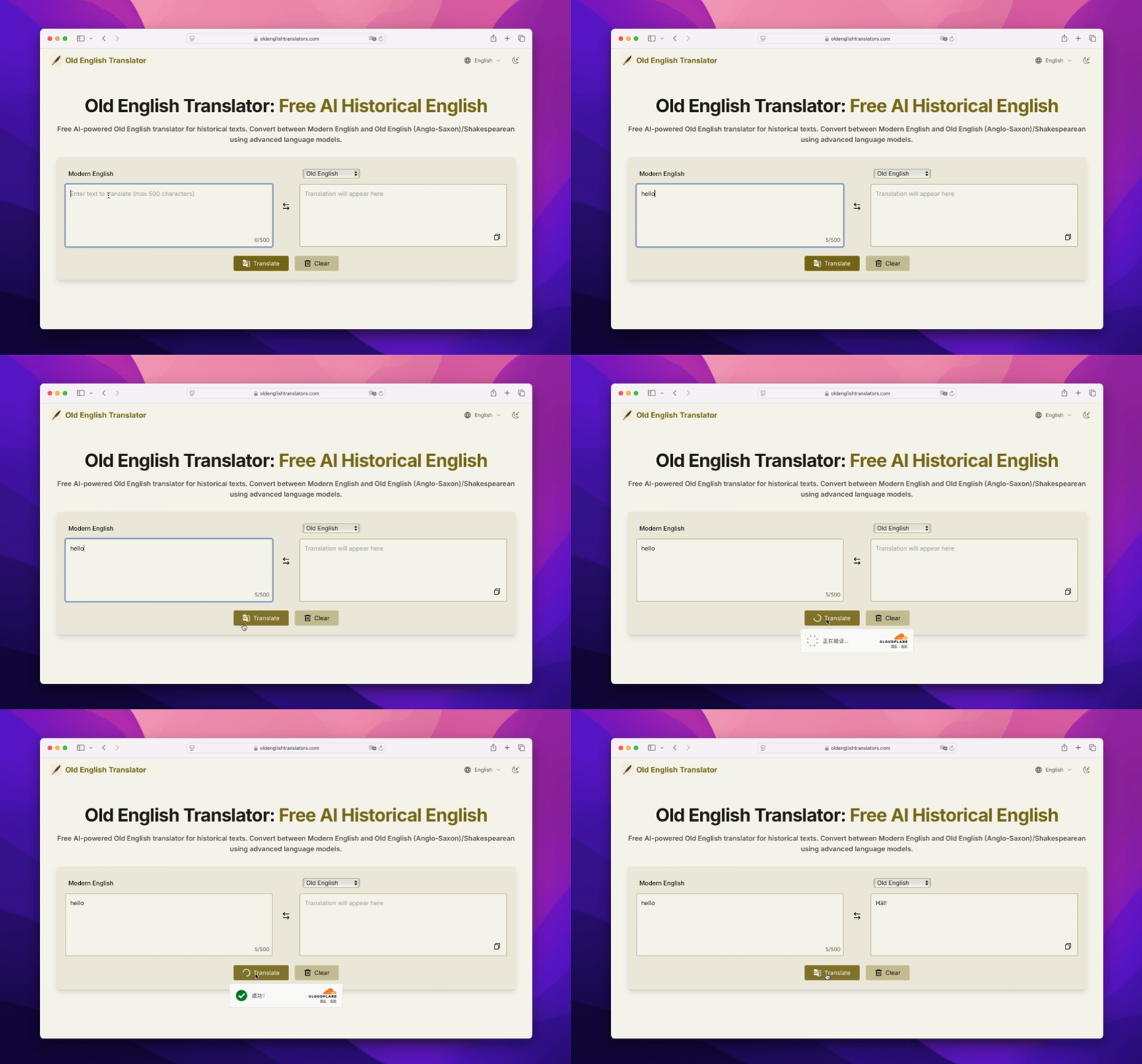
How to Use This Page
Three quick steps in this Shakespeare translator: type, pick direction, translate—then cross-check any line that matters for a grade or an audience.
- Paste or type your textSingle lines work; short paragraphs work better than whole acts. For verse, keep line breaks if you care about rhythm.
- Pick the directionModern → period style for composition and flavor; period → modern when a gloss saves rehearsal time.
- Run translate and refineSwap thou/you if the social cue feels wrong, swap hath/has if you're aiming at colloquial dialogue versus formal speech. Always cite your printed edition for graded work.
What This Tool Actually Does
Pair the Shakespeare translator box with these cues on grammar, sound, and history—why a line feels Early Modern, not merely decorated with random -eth endings.
Second-person registers (thou vs. you)
Early Modern English often marked intimacy, insult, or power with thou/thee/thine and the plural/formal you—sometimes in the same scene. Compare Juliet's intimate "Wherefore art thou Romeo?" with the polite distance rulers expect in court scenes. The model tries to match that social grammar, not random -ests.
Verb endings and "hath" / "doth"
Third-person presents often appeared as "hath," "doth," "maketh," while "-st" marks thou ("Thou dost lie"). These endings were already fading in speech when the plays were new; Shakespeare uses them for meter, clarity, and character voice.
No paywall, no quota tricks
Use it for line-by-line paraphrase, audition sides, or a five-paragraph essay without signing away a card. If you're prepping verse, pair output with a printed Folio or modern edition.
Built-in mini-lessons from real passages
Practice with famous scraps: "Friends, Romans, countrymen, lend me your ears"; "What's in a name?"; "The lady doth protest too much, methinks." Notice how discourse markers—prithee (pray thee), forsooth (in truth), methinks (it seems to me)—signal tone without changing the facts.
Modern ⇄ period in both directions
Feed contemporary English to get a plausible stage sentence, or paste unfamiliar Early Modern syntax and get a faithful gloss (subject–verb bonds, implied thou, embedded clauses). Either way, verify nuance against your edition.
Sound, meter, and the Great Vowel Shift
Rhymes that look odd on paper—love/prove, sea/flea—often snap into place once you remember vowels were shifting while Shakespeare wrote. Iambic pentameter (five stressed pairs per line: du-DUM × five) is why editors sometimes squeeze function words or invert stress; understanding meter explains cuts that look arbitrary.
Questions Readers Actually Ask
Syntax, sound, and scholarship—without repeating the same pitch three times.
Was Shakespeare "writing Old English"?
No. Old English is Anglo-Saxon (Beowulf territory). Shakespeare wrote primarily in Early Modern English—the same broad stage London literary tongue as Marlowe and Jonson, with Latin schooling shining through. Chaucer's Middle English sits between Old and Early Modern; they're three different worlds.
Why do pronouns matter so much?
Thou/thee/thine signal intimacy, contempt, or God's address; you/your marks plural respect or social distance. Characters slide between them on purpose—it's dialogue engineering, not decoration. Getting that wrong flattens power dynamics in scenes from King Lear to Much Ado About Nothing.
Did Shakespeare invent words like eyeball and bedroom?
He didn't "invent English," but his plays contain some of the earliest recorded uses scholars cite—eyeball (The Tempest), bedroom (A Midsummer Night's Dream), lonely (Coriolanus), among hundreds of coinages or fresh compounds that still sound Shakespearean today. Many were probably spoken before they hit print; the Folio captured them when spellings were still settling.
What's the Great Vowel Shift got to do with performance?
Between roughly the 1400s and 1700s, long vowels drifted upward and forward. That's why Shakespeare's spellings and puns don't always rhyme in modern accents but align in reconstructed Early Modern pronunciation workshops. Even without reconstructed accent work, knowing the shift explains odd-looking rhyme pairs and why editors disagree about stressed syllables.
Grammar differences beyond thee/thou?
Shakespearean grammar keeps more flexible word order for emphasis ("This thou must do"), uses "do" as an auxiliary for punch ("I do love"), allows double negatives for intensity, and stacks clause upon clause in soliloquies. Verb agreement can differ from today's rules; reading aloud exposes what slides smoothly versus archaic stage dressing.
What is iambic pentameter in one breath?
Roughly ten syllables alternating unstressed-stressed (sometimes swapped for effect): "But soft, what light through yonder window breaks?" Pentameter is the default spine of blank verse dialogue; prose scenes loosen rhythm deliberately. When AI suggests odd inversions, check whether it's chasing meter—or mangling sense.
Can I submit AI output as final coursework?
Treat any generator—including this Shakespeare translator—as a rehearsal partner: compare its choices with your instructor's guidelines and your edition's notes. Quote primary text from the book or a reputable digital edition; attribute machine-assisted drafting if your school requires it.
Which plays show these habits fastest?
Hamlet for soliloquy syntax and philosophic doubling; Romeo and Juliet for sonnet forms crashed into street dialogue; Henry V for chorus rhetoric and code-switching registers; Twelfth Night for pun density and social disguise. Pair those with one modern scholarly edition and you'll feel the grammar patterns stick.